The surprising reinvention of a holiday that almost wore out its welcome
In 1942, Chicago’s City Council voted to abolish Halloween.
With the United States at war, officials were concerned about conserving resources and preventing the property damage that had long accompanied Halloween mischief. The council voted to replace the holiday with Conservation Day. It’s a startling thought today, when store shelves fill with costumes, decorations, and enough candy to supply entire neighborhoods.
But Chicago’s frustration with Halloween was hardly new. For decades, communities across North America had struggled with pranks that ranged from harmless fun to serious vandalism. Rather than disappear, Halloween would undergo a transformation that changed how families celebrated and eventually helped turn October 31 into a major commercial occasion.
When Halloween Became a Problem
During the late nineteenth and early twentieth centuries, Halloween could be a particularly troublesome night. Young pranksters soaped windows, removed gates, overturned outdoor furniture, and occasionally went much further. Fires, damaged property, and dangerous stunts became serious concerns in some communities, leaving residents and local officials looking for ways to bring the festivities under control.
By the 1920s and 1930s, schools, civic organizations, churches, and neighborhood groups were increasingly encouraging parties, parades, carnivals, and supervised celebrations. Instead of trying to eliminate Halloween altogether, many communities hoped to redirect the mischief into activities children could enjoy without causing trouble.
Some approaches were surprisingly inventive. In 1926, Chicago reportedly distributed 100,000 free movie tickets to encourage young people to spend Halloween in theaters rather than out playing pranks. It was an ambitious attempt to solve a problem that had become much more than a seasonal annoyance.
These efforts didn’t transform Halloween overnight, but they helped establish a different kind of celebration, one in which children and families became the focus.
From Tricks to Treats
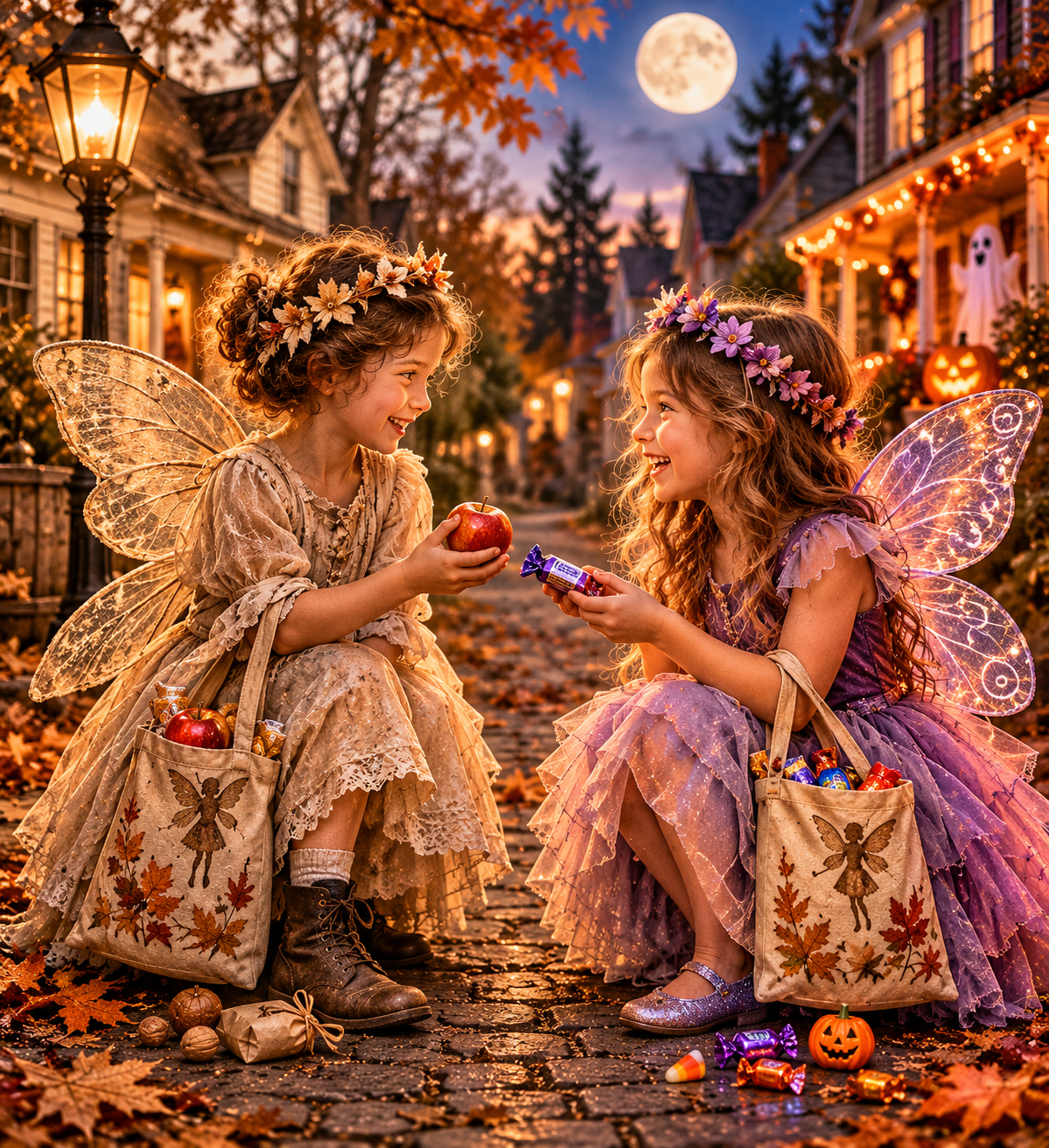
As communities looked for ways to make Halloween more welcoming, trick-or-treating became an increasingly familiar part of the celebration. By the 1940s and 1950s, children dressed in costumes were making their rounds through neighborhoods, collecting treats instead of causing trouble.
By the time I was growing up in the 1980s, the idea of actually playing a trick on someone who didn’t give me candy never crossed my mind. We knocked on doors, said “trick or treat,” and waited to see what appeared in the bowl. I didn’t learn until adulthood that those familiar words once carried a more mischievous meaning.

When Halloween Became Big Business
As Halloween became more focused on children and families, businesses found opportunities in the growing celebration. Costumes and treats were hardly new, but manufacturers began offering affordable products that made participating easier.
In the early twentieth century, Halloween costumes were often assembled at home using old clothing, fabric scraps, and homemade masks. Ghosts, witches, animals, and mysterious masked figures were familiar choices. As ready-made costumes became more widely available through stores and catalogs, however, children gained entirely new possibilities.
Companies such as Ben Cooper helped popularize boxed costumes featuring printed outfits and molded plastic masks. With television, movies, and comic books influencing children’s interests, Halloween became an opportunity to dress as a favorite character. By the 1970s and 1980s, those boxed costumes were a familiar sight in stores.
Homemade costumes never disappeared, though. My grandmother handmade plenty of Halloween costumes over the years, including a pumpkin costume for me. Store-bought and homemade creations existed side by side, just as they do today.

Candy followed a similar path. In the early twentieth century, children might receive apples, nuts, cookies, popcorn balls, homemade sweets, coins, or small toys. There wasn’t yet an expectation that every participating household would offer commercially packaged candy.
As trick-or-treating grew, candy manufacturers began promoting their products specifically for Halloween. By the 1950s, familiar brands appeared in seasonal advertisements, and over the following decades, individually wrapped candy became increasingly common. It was convenient to purchase, easy to distribute, and required none of the preparation involved in making treats at home.
By the 1980s, miniature chocolate bars, hard candies, chewy sweets, and seasonal favorites were firmly established in Halloween bags. I especially remember those inexpensive little chocolates wrapped in colorful foil decorated with pumpkins, ghosts, and other Halloween designs. The wrappers were often better than the chocolate, but they were part of the experience all the same.

From Millions to Billions
Just how big has Halloween become? According to the National Retail Federation, Americans are expected to spend $13.5 billion on Halloween in 2026, including approximately $4.4 billion on costumes, $4.3 billion on decorations, and $4.1 billion on candy.
That’s an extraordinary amount of money for a holiday that communities once struggled to keep under control.
And Halloween is no longer limited to one evening of costumes and candy. Decorations appear weeks in advance, seasonal shops open their doors, and elaborate yard displays have become attractions of their own. Nearly half of Halloween shoppers now begin making purchases in September or earlier.
What began as an effort to make Halloween less troublesome has grown into an entire season of celebration—and a multibillion-dollar industry.
The Convenience That Helped Halloween Grow
It’s easy to look at Halloween’s commercialization and see only advertising and consumer spending. But ready-made costumes and packaged treats offered something families could appreciate: convenience.
A parent no longer needed to sew a costume or prepare homemade treats for every child who might knock on the door. Stores offered inexpensive costumes, familiar candy, and decorations that could be brought out year after year.
As a parent, I can certainly appreciate that. I love the creativity of homemade costumes and the traditions passed down through families, but there’s also something to be said for finding a costume your child loves and picking up a bag of candy without spending hours preparing either one.
Businesses didn’t invent Halloween’s reinvention. Community efforts to discourage vandalism and encourage family celebrations were already underway. But commercial products helped support those changes, giving families convenient ways to participate while creating a growing market for manufacturers and retailers.
The Halloween We Know Today
Today, Halloween looks very different from the troublesome holiday that once frustrated entire communities. Neighborhoods welcome trick-or-treaters, families plan costumes and celebrations, and stores fill with decorations and candy long before October 31. What once prompted calls for restrictions has become a tradition that millions look forward to each year.
And I’m glad it did. Somewhere along the way, a holiday that some communities wanted to put an end to became one that generations of children have been able to enjoy. Halloween could have taken a very different path, and I’m grateful that the traditions we know today became part of our childhoods—and now, our children’s.
Further Wandering
- When Halloween Was All Tricks and No Treats — Smithsonian Magazine A fascinating look at Halloween vandalism and the community efforts that helped transform the holiday.
- Halloween Mischief in Chicago — CBS Chicago The story behind Chicago’s attempts to curb Halloween trouble, including the 1926 movie initiative and the 1942 Conservation Day proposal.
- The Origins of “Trick or Treat” — SooToday Explore the 1917 Canadian newspaper discovery behind our accompanying Field Note.
- Halloween Highlights from the Museum Vaults — Smithsonian National Museum of American History A collection of vintage Halloween objects, including an original boxed Ben Cooper costume from the 1980s.
- From Homemade Halloween Treats to Packaged Candy — Smithsonian National Museum of American History How apples, cookies, and homemade goodies gradually gave way to the familiar wrapped candy of modern Halloween.
- 2026 Halloween Consumer Spending Survey — National Retail Federation Explore how Halloween became a multibillion-dollar holiday, with projected spending on costumes, candy, decorations, and other seasonal traditions reaching $13.5 billion in 2026.
Leave a Reply