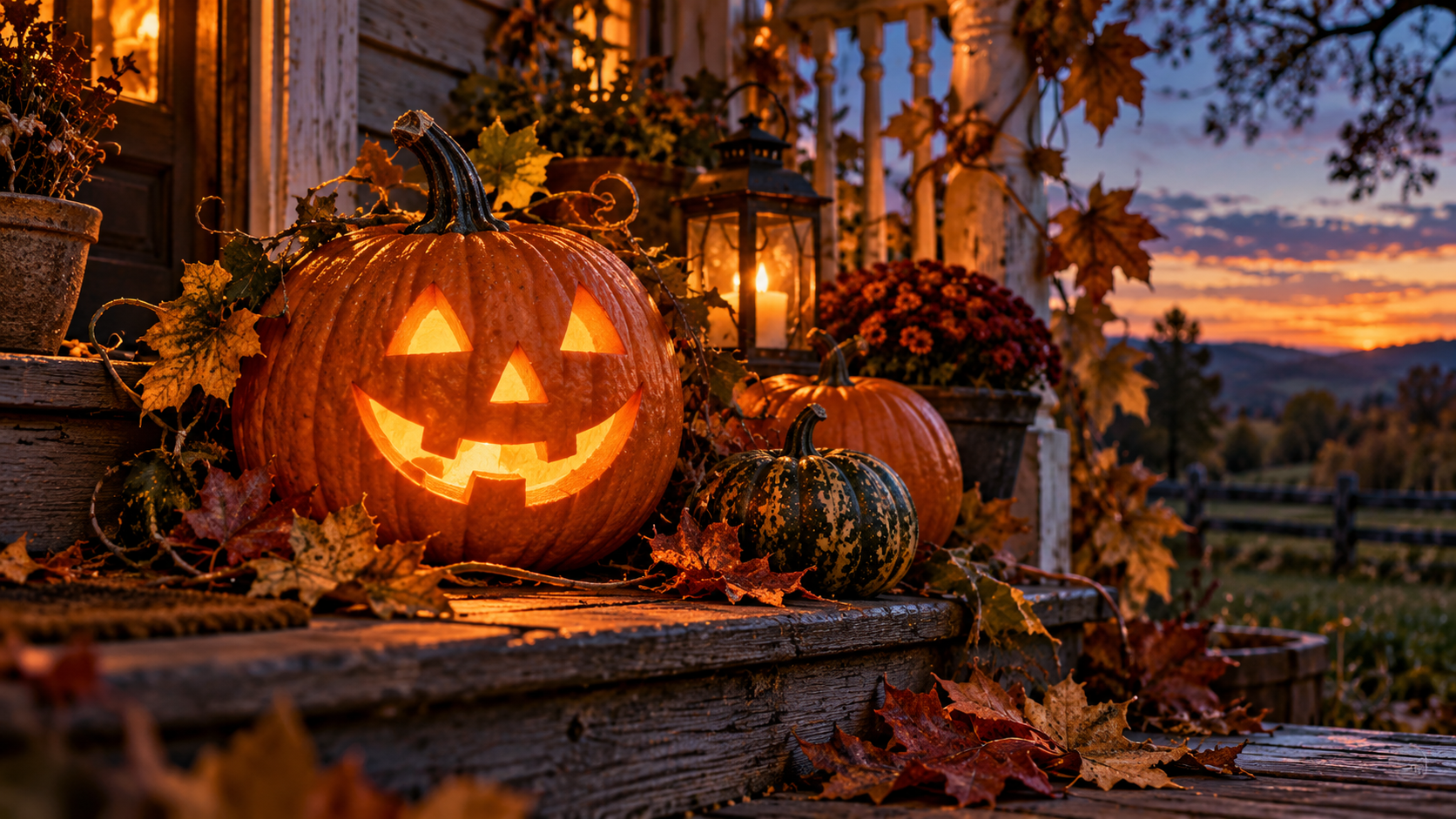
This weekend, the boys carved pumpkins. By Saturday afternoon, the chickens had inherited a generous pile of seeds, stringy insides, and leftover pieces. A few days later, there wasn’t a scrap in sight. The chickens had apparently enjoyed their share of Halloween just as much as the kids.
Not long afterward, I came across a pumpkin-carving trick I’d never heard of: instead of cutting around the stem to make a lid, you can cut an opening in the bottom. Suddenly, all those years of reaching awkwardly into a pumpkin to scrape out its insides seemed a little unnecessary.
It got me wondering what else I might have missed about something we’ve been doing every October for as long as I can remember.
A Different Way to Carve
Most of us learned to carve pumpkins the same way. Cut a circle around the stem, pull off the lid, scoop out the insides, and get to work on a face. It’s familiar, wonderfully messy, and part of the fun.
But cutting from underneath has some practical advantages. The stem stays intact, the opening is hidden when the pumpkin is displayed, and you can lower the finished jack-o’-lantern over a battery-operated candle instead of trying to reach inside to position the light.
It’s a small change, but one I’m looking forward to trying.
Of course, cutting a pumpkin is only the beginning. Once you’ve finished carving that perfect crooked grin or toothy smile, there’s the question of how to keep it looking that way.
Keeping the Glow a Little Longer
A freshly carved pumpkin can look wonderful on the porch, but it doesn’t take long for the edges to soften, the face to sag, or an unwelcome patch of mold to appear. Cutting through the skin exposes the moist flesh to air and microorganisms, beginning the natural process of decay.
There are all sorts of tricks circulating for slowing that process, including diluted vinegar and bleach solutions. Both are suggested as ways to discourage microbial growth, but neither will preserve a pumpkin indefinitely. And if you hope to make use of the pumpkin afterward, it’s worth thinking about what you put on it in the first place.
A pumpkin intended for animal feed should be kept free of chemical preservatives, paint, and other decorations that could make it unsafe to eat. Even an untreated pumpkin shouldn’t be offered to animals once it becomes moldy or spoiled.
Sometimes the simplest approach is to carve closer to Halloween, keep the pumpkin somewhere cool when possible, and accept that part of a jack-o’-lantern’s charm is that it doesn’t last forever.
After the Jack-o’-Lantern Goes Dark
Eventually, the candles go out, the costumes are put away, and the jack-o’-lanterns begin to look a little tired. Their crooked smiles sag, the edges soften, and Halloween gives way to November.
But there’s still something to be said for giving a pumpkin another purpose.
The seeds from a freshly opened pumpkin can be cleaned, dried, and roasted for a seasonal snack. Fresh pumpkin flesh suitable for cooking can find its way into soups, breads, or other autumn recipes. And for those with a compost pile, untreated pumpkin scraps can eventually return to the garden as rich organic matter.
Then there are the chickens.
Our flock has never been particularly concerned with making a pumpkin look pretty. They’ll happily work their way through the softer pieces first, leaving the more challenging bits for later. My mom has another approach entirely: she hangs pumpkins from a rope for her chickens to peck at, turning an ordinary treat into a little activity.
There’s something wonderfully satisfying about watching an animal make such enthusiastic use of something we might otherwise have thrown away.

It’s a small thing, finding another use for a pumpkin. But there’s a certain pleasure in letting something seasonal serve more than one purpose, whether that’s a bowl of roasted seeds, a little entertainment for the chickens, or compost for next year’s garden.
And somewhere along the way, I discovered another curious thing about jack-o’-lanterns.
They weren’t always pumpkins at all.
Long before the familiar orange faces appeared on American porches, people were carving lanterns from other vegetables, including turnips.
But that’s another rabbit hole, and a story for another October afternoon.

Leave a Reply